
Every Question Answered
Hello friends,
It's winding down over here at A&B HQ. I've started tallying things for my Year in Charts posts, not only about what I've read, but what I sent out, sold, and didn't sell as a literary agent. (For those of you who don't know–which might be some of you???–I've been a literary agent for almost 20 years. I have to remember that not all readers out there have been with us since the beginning. Hi new subscribers! Glad to have you here!) I'm going to do a gift guide, too! Spoiler alert: it's all books.
I'm also gearing up for some fun things in January, embracing the New Year, New You vibes that all the stores will be pitching you in a few weeks. I kinda like that time of year, akin to new school supplies time in September, and I will inevitably buy a new planner. And I will fill that planner with ambitious plans to write a new book next year, just I like I did with last year's planner, which I stopped using in ohhhhh July.
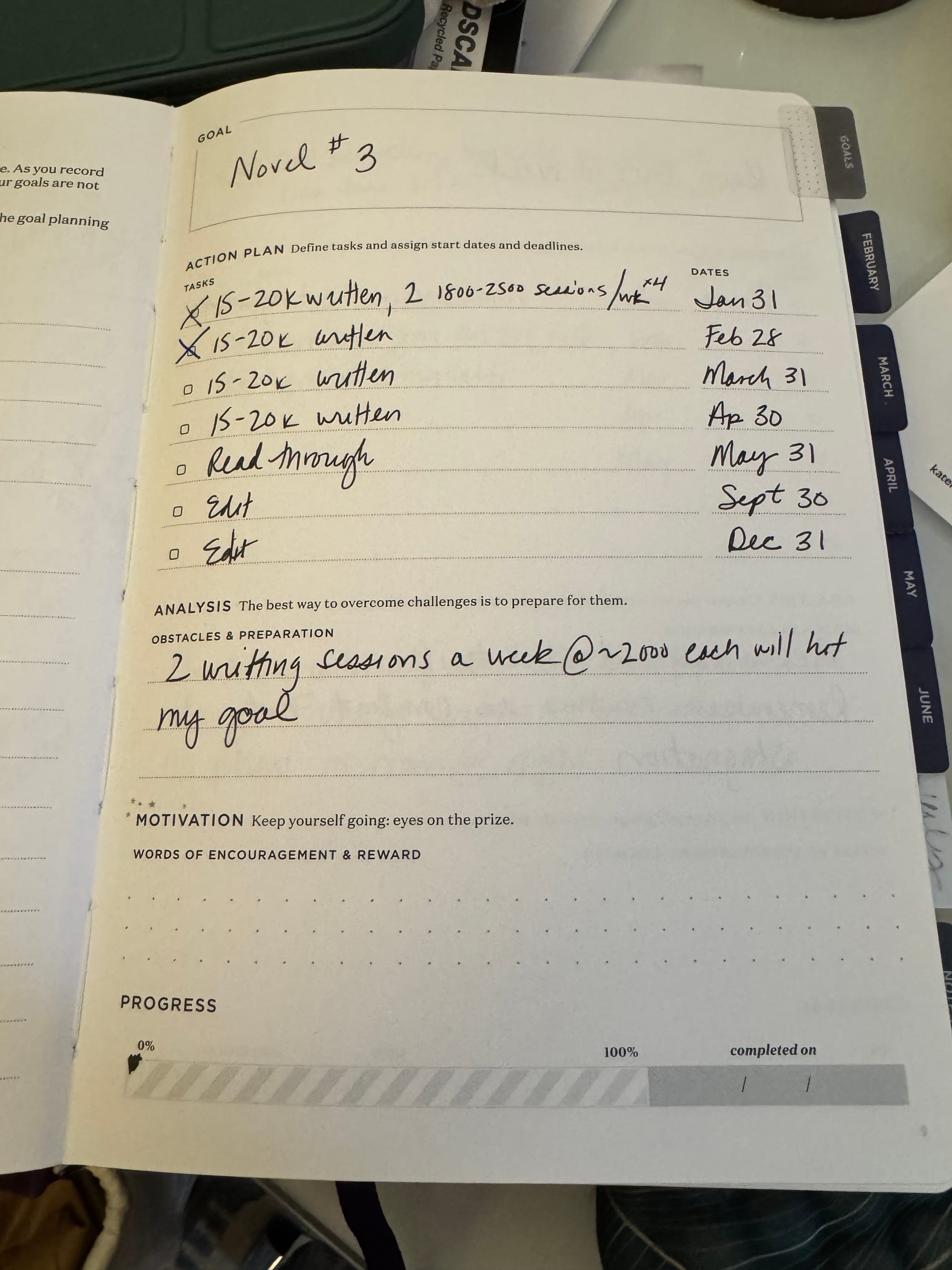
I want to write more (ok, period but also on here) about how we prep to do the next thing on our writing list, whether that's starting a draft, editing a draft, prepping to query, or calling it on a submission that's not working. Prep is boring, but prep is vital.
The first step in all that prep is asking questions. I've built a career on answering people's questions and frankly, I love being the one with the answers. (And I do occasionally note when I don't have the answers, even though it pains me.) Paid subscribers can enter their questions here for our weekly Q&A Thursday posts. I lurk on r/publishing to see what kinds of questions and answers people are posting there. I add my two cents to the many, many questions posed on Threads every day. Recently, I've noticed the questions, especially on Threads, have become increasingly granular. People want to know the exact circumstances a Good Thing happened so they can replicate it and thus be awarded that Good Thing. What day of the week did you send out your query letter? How many words was your query letter? How many queries did you send out? What POV was your first novel vs what POV was your second novel and did either of those sell to a publisher? How many questions did you ask your new potential agent and in what order? If your editor had your complete draft for 31.5 days, including weekends, is it ok to send a follow up?
Yes, I'm exaggerating. And yes, this is related to a discussion we had a few weeks ago about collectively sharing publishing stories and about which I am still collecting answers to this questionnaire, but I'm coming at this from the other side, I think. The purpose of any writer asking what is the optimal time of year to query or something like that is manifold. For one, they don't know that there isn't a single optimal answer, because sometimes there is an optimal answer to a question like that. For example, as an agent, if I want to sell the calendar rights to one of my books, there's like a three month period in the beginning of the year where editors are making those plans. Otherwise, I might be out of luck. Broadly speaking, though, agents don't work like that. But further, someone who asks this question is trying to find the shortest path to their goal, which is only natural, too. When you don't know how something works, you don't know that it doesn't work along a set of singular, rigid rules, so you start off by asking about those singular rigid rules. It makes perfectly logical sense to do so.
Publishing, writing, etc are not perfectly logical mechanisms. Just ask my wonderfully talented friends and clients who've heard a lot of "we liked this but just didn't love it" about their recent book submissions. It's infuriating. But, exploring that is for another post. My point here is that as you learn about publishing and writing, as you learn about what you need to know about your book and path, I want to give you some tips on how to ask better questions, and how to know if your question has an answer at all. When you're formulating a question, whether you're going to ask a friend or the internet or your agent (btw, you can ALWAYS ask your agent a question, no matter what it is.) here are a few questions to ask about your questions.
Does this question have a single, definable answer for all circumstances?
Some questions do, like Is this agent open to queries? Or do I need to send illustrations in with my picture book text if I don't plan on illustrating it myself? (A: check their website; No, respectively.) Other questions aren't so straightforward even though you think they could be. Like, what is the optimal time of year to query? Optimal for all authors, genres? Optimal for getting an offer, getting read quickly? You might pretend to answer your own question and think Yes, September is the optimal time to query. If that was true, wouldn't you have you seen big Start Your Query Engines promotions in September in the writing places you haunt online? Would you have you seen people ramp up their Query Bootcamp webinars or 20% off Query Critiques editorial offers? If not, then their probably isn't this One Perfect Time to query. Otherwise, people would be capitalizing on it like Black Friday. It's worth one minute of thought to be like if there was a specific answer to my question, would it evident to me already? not because you can't ask this question, but because there might be a better, more helpful question lurking under it like Do I need to rush to make this query letter better or can I take a little more time with it? (A: take more time with it.)
Is my question really is my experience normal?
When I see writers ask how many weeks was your first novel on sub vs how many weeks was your second? I know that writer is really asking I have encountered a situation in my publishing journey and I just want to know if I should freak out about it yet or not. They are looking for benchmarks, a gut check, assurance that whatever is happening to them has also happened to other writers, for better or worse. The problem, though, is that all number of weeks for a book to be on submission is "normal." Some great books sell very quickly. Some great books sell after a year or more on sub. The book that sells quickly is not automatically better than the book that took longer. The reader, in the end, will have no idea how long your book was on submission, or how long it took you to get an agent, or how many rejections you got. They'll just know you wrote and published your book. Or they won't know you didn't because there isn't some big Failure Leaderboard showing all the books you didn't sell. When you're asking a question, it is often helpful to ask yourself am I looking for an answer, or just reassurance?
Am I just asking for someone to tell me the future?
Also behind these If your editor didn't pick up your option, how long did it take for another publisher to pick up that book when you went on wide submission? questions is someone looking for a glimpse in a crystal ball. The real question is if my publisher doesn't pick up my option book, do I even have a chance of selling it elsewhere? And the answer to that is individual to every single author. Some option books sell because the first book did really well. Some option books sell because the idea is perfect, even if the first book didn't sell well. Some option books don't sell because the whole editorial team has turned over and it's a completely different place now, which has nothing to do with the sales of either book. ¯\_(ツ)_/¯ The internet cannot answer a question like this, or any question best answered by a psychic. I wish it could. I have a lot of questions for any psychics or fortune tellers out there. I'll settle for tarot if someone wants to read my cards.
Is the only person who can answer my question me?
When I see writers ask specific questions about manuscripts, theirs in particular or hypothetical ones, what I want to tell them is that they are the only person who can answer that question and it's ok if it takes you some time to answer it. Questions like should my POV be first person or third? Or how many times do you need to edit your book? Or how do I know my first page with catch an agent's attention? cannot be answered by people who have not read your manuscript. They could be great questions to ask your agent or a developmental editor you might hire, and they can probably give you pretty precise answers, or at least generous feedback to help you answer the question yourself. But there's no rule about what books should be in what POV or how many times you should edit your book before you send it out. I read my book nine times through before it went to the printer, and each one of those times was an editing pass. So, is that the answer? For me and this book, yes. For you and yours, no. The hard/great part about growing as a writer is getting to know yourself as a writer. You'll get a feel for whether you need (or want!) to do another editing pass or whether a reader's head will be turned by your first page. The main problem with that is it takes years to get to that point, so all you can do in the meantime is ask questions and keep writing. With ones like this, though, consider who you're asking, and if you're asking them as a stand-in for your own experience.
Still, you can ask any question you want.
You can go on Threads or ask me or ask your agent any question that comes to mind. Asking questions is not bad. Asking questions literally helps you learn things. But learn to be self-aware of your own questions instead of jumping to social media–or god forbid, Chat GPT–for a quick answer. Take a minute and think. And be prepared for a ¯\_(ツ)_/¯ answer a good chunk of the time. If there was one way publishing worked for everyone, one secret tip or query plan or whatever that always resulted in an offer, deal, bestseller, then that'd be the only way anything got published and everyone would do it that way. Why do we eat soup with a spoon? Because that's the best tool for the job. Unfortunately, books aren't soup, and publishing is not a spoon.
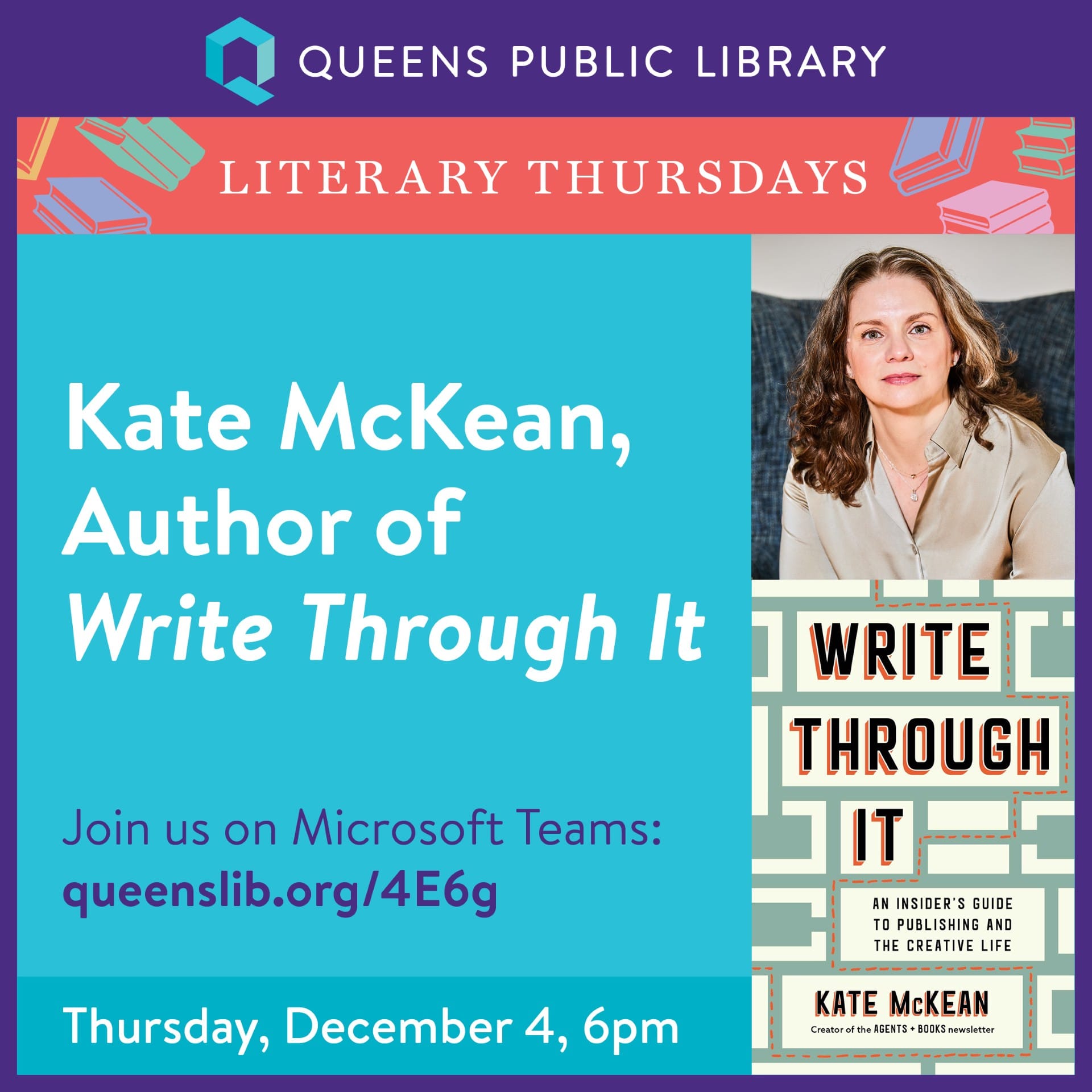
Free virtual event! Sign up here! My last event of 2025!!
XOXOXOOX,
Kate

Comments ()