
How to Build a Platform Before You've Finished Writing Your Book
In 4 or 5 Easy Steps
Hello Friends!
For all the questions I answer on here and online, my least favorites are:
I just finished chapter one! Should I start a newsletter now?
I just wrote an outline for my debut novel. Should I start making fan art and TikToks for it?
I just finished my first book and haven't even thought about editing it yet! Should I assemble a street team and reach out to influencers?
As always, I'm exaggerating the scope of these questions, but not by much. You can also see what I'm getting at here. Writers are worried about the next steps in their publishing journey way before they need to be. I get it. I really do. Publishing types, me included, have beat the drum of YOU NEED A PLATFORM for years now. We've also stressed that you need the platform before the book comes out. There's no specific timeline or method to make all these things happen in the perfect order. But here's what I would tell my client if they were worried about this, long before we were ready to submit their book to editors (but probably still after the first few draft were complete).
If You're Writing Fiction:
Step 1: Really and truly finish writing your book. That is your priority. If you don't even have a first draft, you don't need to be thinking about platform yet.
Step 2: Pick a few social media platforms to focus on. Your readers aren't going to be everywhere and you, too, don't need to be everywhere. You might change your mind down the road, but don't overwhelm yourself with trying to master every social media platform available to you. Pick two. Cross post to others to see if you like one or another better. This is just a warm up.
Step 3: Pick a lane. If you're writing a historical novel about the French resistance in WWII, you don't only have to post about WWII, baguettes, and codebreaking. But you might want to post about the other good historical novels (any time period) you're reading and follow other writers/readers of that genre. You also don't only have to post about the genre(s) you're writing in. Big fan of Below Decks? Post about that. Have conversations about that. You're making friends here, not lining up future buyers of your book. You don't have anything to sell yet.
Step 4: Rinse and repeat. As you are editing your book, and editing it again and again, post stuff. Talk to people. Reply but don't be a Reply Guy. Talk about writing. Be genuine and curious and interested. Don't farm for engagement–engage. It will feel like it's not working and that means it's probably working. You're not going to steadily get more likes and follows just because you're on there. Success is not linear. Keep going.
Step 5: When you have something regarding your book to talk about, talk about it! You're allowed to talk about your book before it's done, you have an agent, you have a deal, you have a pub date. It's not illegal. You won't mess up anything re: your copyright. A future publisher won't be like well, you posted your first paragraph on Threads three years ago so no book deal for you. It's not that deep. But also, don't expect readers to be interested in your book out of the blue. How do you react to other writers when they post stuff about their unpublished work? You likely ignore it unless you kinda know the person. See how that goes? When others are invested in your work PRIOR to you releasing anything (trad or self-pub) they have more interest in it. The 10 or 15 friends you've made online before you have anything to share may repost your stuff (because they like it and you) and things may SLOWLY grow organically from there. This is the foundation of your platform, at least on social media.
If You're Writing Non-Fiction
Step 1: Spend a good amount of time on your Marketing/Publicity section of your book proposal. Make some big, messy lists. Your platform (for any writer) is not just social media, but can include professional organizations you belong to, short-form/journalistic writing, professional publications, podcasts/interviews, newsletters/blogs, people you can network with, and anything else that might be specific to your area of expertise. I honestly just went back and looked at the book proposal I did for Write Through It to see what I included. (The whole thing is included in the back of the book, so you can see for yourself!) I did all the above, as well as mentioned the teaching I did and all the writers conferences I've attended. Anywhere I thought I could get to people's ears and eyeballs, online or off, I included.
Step 2: Do any of the stuff you listed in Step 1, but not all of it and not all at the same time. While you're writing your proposal (because you lucky ducks don't have to write the whole book), try to get invited to conferences. Pitch yourself to some podcasts. Write about your topic online, in publications or a personal blog/newsletter. Everyone read this about why you do or don't need a newsletter first though. Engage online on whatever social media platforms (don't forget LinkedIn!) that are most relevant to your field, just like I mention for the fiction writers. Try a bunch of things and see what sticks. If nothing sticks, keep going. It takes time.
Step 3: Rinse and repeat, possibly for several years. Yes, I know. I had been writing this newsletter for three years or so before I got the book deal for Write Through It, and I came into the newsletter game with a medium-big following on Twitter as well as name-recognition in my field, teaching gigs, and previous online publications. This newsletter didn't make my platform; it came out of my platform and provided me with a consistent venue to reach readers. Social media doesn't sell me any books, you guys. This does.
Step 4: Shoot your shot. There isn't a day when you reach X followers or subscribers that means you're allowed to send your book proposal to agents. I have double the followers on here now than when I sent out my book proposal. ¯\_(ツ)_/¯ You send it out when you feel mostly ready to, when you can say with your full chest (or almost full chest) I have something to say and these are the people who I think will listen. You may be right and you may be wrong. That's normal, ok, and common. Everyone's coming from that position when they start. You will not be 100% sure and that means you're doing it right. Don't let impatience or fear guide you here.
The bottom line for all writers is start small and be patient. All of this takes time and there isn't a distinct starting and finishing line. It's like exercise or learning a new skill, or knitting a sweater. You gotta do it consistently, a little at a time, to see results. Also, you are correct that this is a lot of work on top of your life, day job, and writing the actual book. It sucks, but I don't have a fix for it. We all wish we could just write and let the publisher do all the selling, but that is not the book market we have. You can lament that. But I don't know that any of us can change it.
Don't freak out. Start anywhere. But finish writing the damn book/proposal first.
XOXOOXOX,
Kate
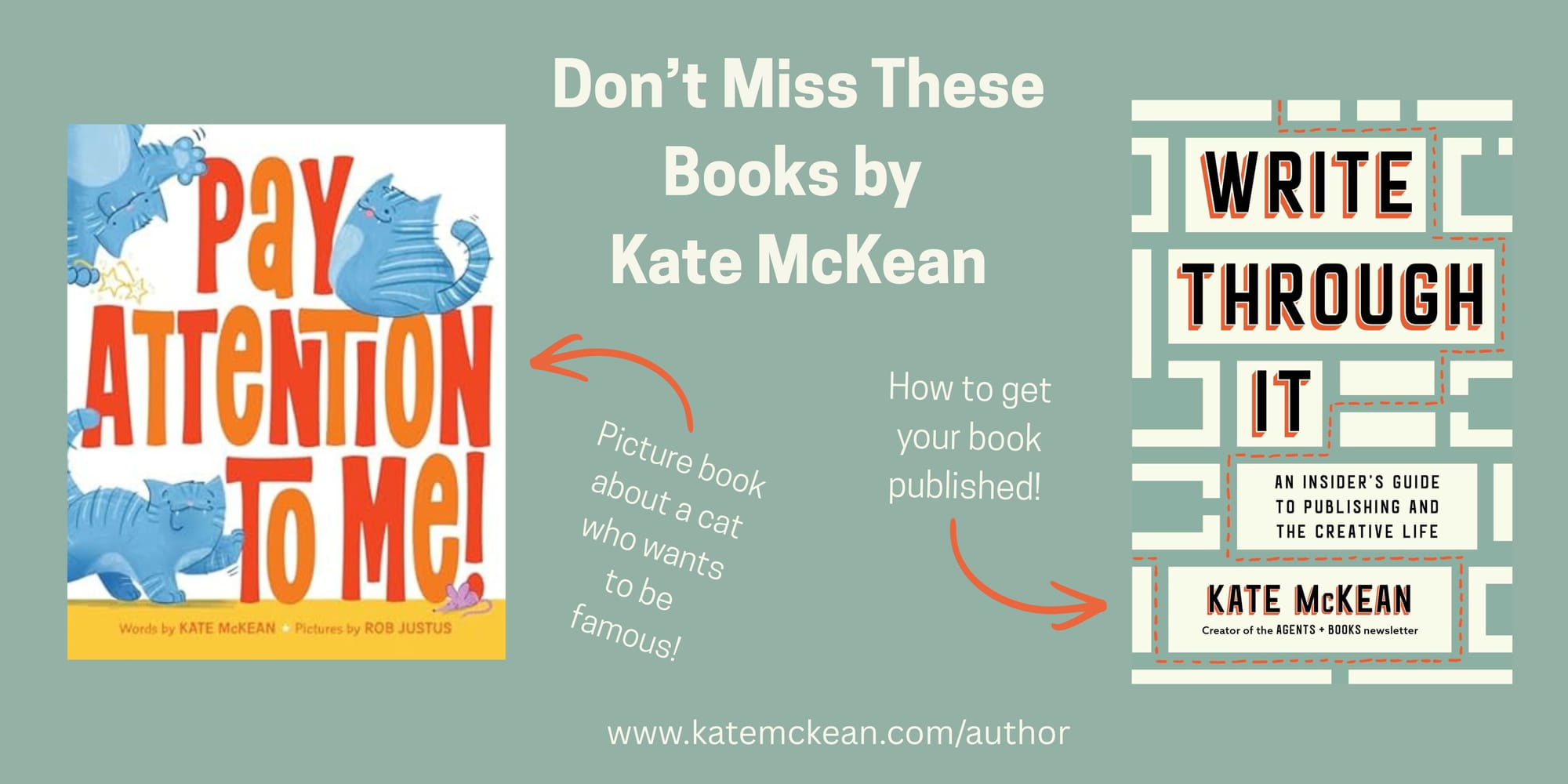

Who am I and what is this? This is Agents & Books, a twice-weekly newsletter about writing, publishing, and the creative life. I've been an agent for 20 years, most of it at the Howard Morhaim Literary Agency, and I'm the author of two books: Write Through It: An Insider's Guide to Publishing and the Creative Life (Simon Element, 2025) and a picture book called Pay Attention to Me!, with illustrations by Rob Justus (Sourcebooks, 2026). If you haven't already, become a subscriber today. $5 a month or $50 a year. Same price since 2019! Need to cancel? Look here.


Comments ()