How to Write a Picture Book Even if You're Not an Artist
Think in Pictures and Words
Hey friends,
I'm taking a little time off my agenting work (watch me answer five emails after this lol) while my kid is still away at summer camp, and for me, that means going to a second location and...working. Except I'm doing FUN work, not work-work, even though my work-work is also fun. I have great work-life balance, what do you mean?
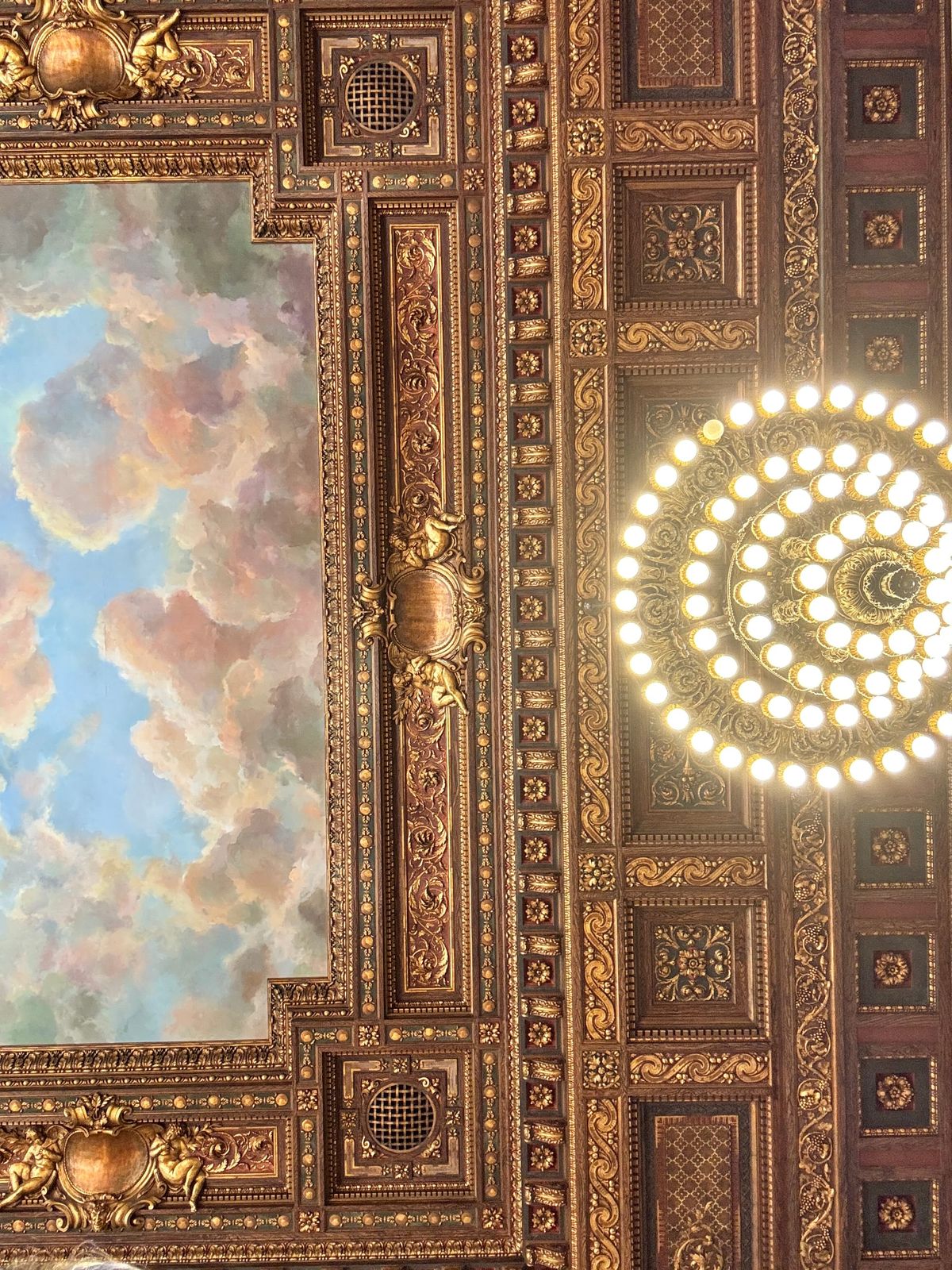
I am in one of my favorite places to write in all of NYC. The Rose Reading Room at the main branch of the NYPL. (The one with the lions.) You can just go in, sit at one of the long, beautiful tables, use their wi-fi, and work. It's the perfect place to be near people without having to A: buy anything and B: talk to anyone. It is a gorgeous place and it makes me incredibly happy.
I'm working on three books apparently? But one of them is another picture book and my wonderful agent Michael Bourret sent me the best notes. They truly unlocked what was wrong with the story and I was inspired to get a new draft going right away.
I am not, however, a graphic artist, unless you count abstract watercolors I do with my kid for fun. I will not be illustrating my own picture book ever, but I do have to think about what the illustrations will look like on the page. Maybe not in terms of color palette or medium or style, but how the illustrations will do the work the words aren't doing. The pictures are half, if not more, of the storytelling in a picture book. I usually use this example when I explain this to people.
I can write picture book text that says:
"George the cat was having the worst day. His lunch fell in a puddle. His rain boots have a hole in them. His umbrella broke and he left his book at home."
Or I can write this:
"George was having a very bad day." [Art note: a wet cat caught in a rainstorm.]
I don't even have to explain all the things that could show what a wet cat in a rainstorm looks like, because I want to give the artist room to explore the image and make it great. If there was something specific needed in the image, like maybe the broken umbrella becomes important later, I'd note that in the Art Note. But otherwise, I like to keep them spare to make room for genius illustrators to do their thing.
It's important, too, to know what page the words and storytelling-important images will go. Most picture books start on page 2, with page 1 being the title page. The first full-page spread would then be pages 3-4. What happens before and after a page turn can really affect the story, too. Just think about The Monster at the End of This Book, one of the most genius picture books of all time. When you turn the page couldn't matter more than in this book! If you still don't quite get it, go read it a few dozen times and come back to me.
To plot this out, I do a highly technical and precise map of the spreads in my picture book. I've included a diagram:
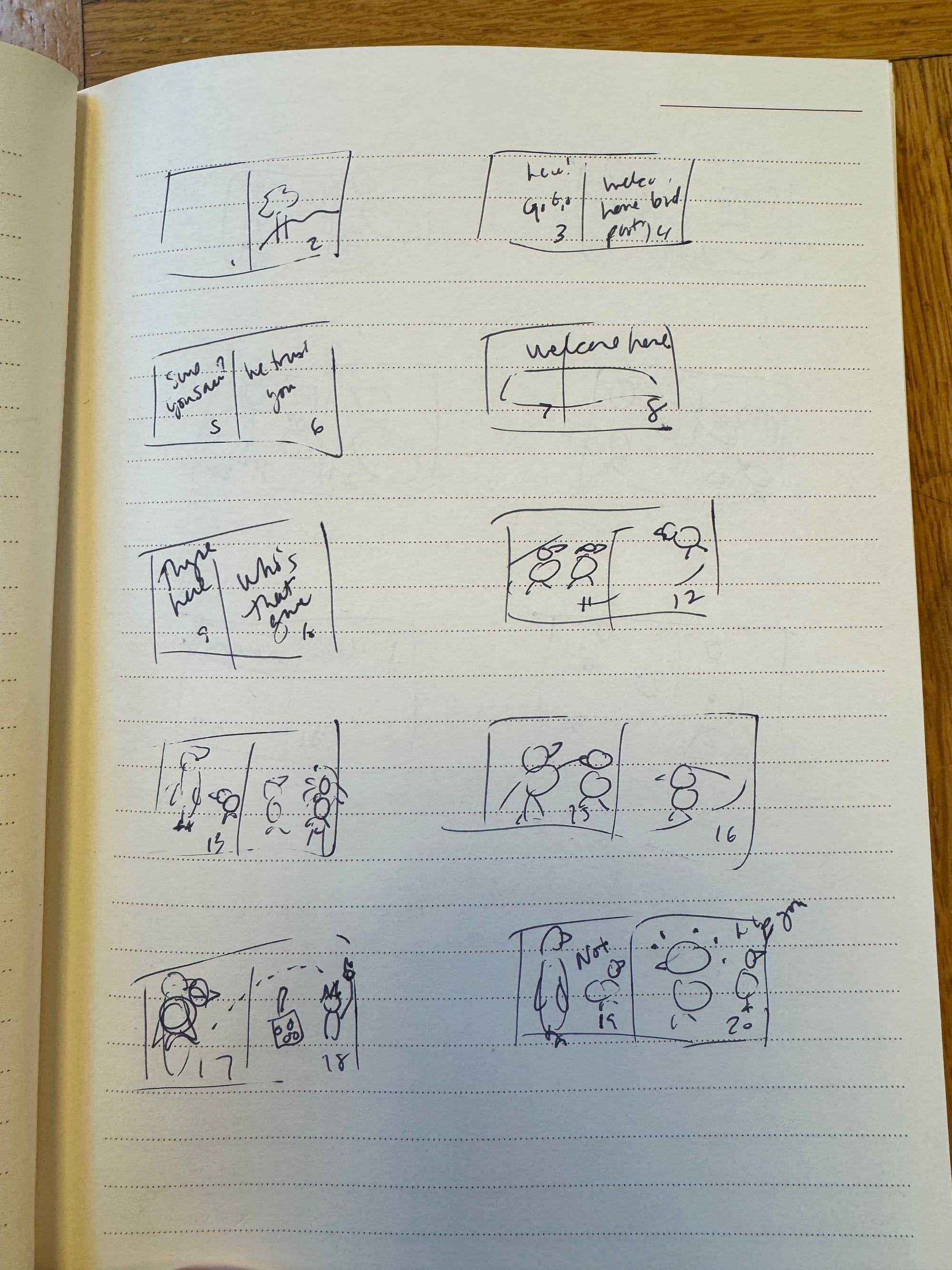
I write this out a couple (dozen) times as I'm mapping and editing the book. It helps me envision each page and imagine what storytelling could be done with images and thus where I can cut words. I'm not aiming for the shortest picture books possible, but my drafts are always long and I always need to cut. I'm sure it'll get further cut along the way. This is good! I want to be edited. This particular book hasn't sold yet (fingers crossed) and might not–because that's just reality. But every book I write teaches me something new and can only make the next one better.
Picture books are the hardest books to write and sell, imho. Everyone thinks they're easy because they're short and for kids, but those two factors make them infinitely harder. You have so little space to tell a robust story. You have so little time to hook the reader and stand out from the crowd. It's a huge market, and thus very competitive, because people often buy books for kids, their own and for presents. If you want to break into this area of publishing, my first suggestion is to go to the library and read 200 picture books. I'm not exaggerating with that number. Try to read as many as you can published in the last 5 years. Notice what you like and don't like. What makes you laugh or roll your eyes. What feels fresh and what feels preachy. Then, go write ten of your own picture books. One of those just might stand out.
I'm off to write some more. I hope you're having a lovely summer, whether you get to work or play or both.
XOXOXOXO,
Kate

Who am I and what is this? This is Agents & Books, a twice-weekly newsletter about writing, publishing, and the creative life. I've been an agent for 20 years, most of it at the Howard Morhaim Literary Agency, and I'm the author of two books: Write Through It: An Insider's Guide to Publishing and the Creative Life (Simon Element, 2025) and a picture book called Pay Attention to Me!, with illustrations by Rob Justus (Sourcebooks, 2026). If you haven't already, become a subscriber today. $5 a month or $50 a year. Same price since 2019! Need to cancel? Look here.

Comments ()