How To Be An Author: What You Don't Need
Hello Friends!
In our continuing series on How To Be An Author, I'm excited to talk today about what you DON'T need to reach your writing goals. In this season of it's time to buy everything! and surprise everything is more expensive! I'm happy to share with you the things you do not have to buy, attain, work toward, or worry about in your quest to becoming an author. Isn't that nice?
This series, as a little recap, started with some ideas on what makes you an author vs a writer and how you can can use those two words the way that suits you best. We talked about whether you want to be an author of a book or books. How creating a writing practice is key to being an author, even if you don't write everyday, and how to manage all the book ideas you have (or don't have). We even went hyper-specific and went over why authors have to make all those little graphics in Canva. This series will continue into 2026, focusing on hard and soft skills. If there's something you've always wondered about being an author, drop it in the comments and I'll add it to the list!
As you go into the new year, and get bombarded with all the New Year, New You messaging, resist the urge to sign up for all the things you think you need to be A Real Author (well, except this newsletter ha). The only thing I can promise you'll get from this newsletter is information. I can't give you the One Tried and True Method for Getting an Agent Quick or Book Ideas Guaranteed To Be a Bestseller, etc etc. Those things don't exist. So keep this post bookmarked or write these things down on a post-it so you won't be tempted to sign up for or buy any of the things on this list.
Things You Don't Need To Be An Author
An MFA
Take it from me, an author with an MFA and 20 years of publishing experience. You don't need an MFA. An MFA is a Masters of Fine Arts and here, we mean that in Creative Writing, either fiction, creative non-fiction, or poetry. There are hundreds of great MFA programs in the US and if you have the means to do one of them, they can be a great place to hone your craft. You do not, however, need a diploma from one of those programs to get an agent, get published, or be successful. I received my MFA from the University of Southern Mississippi in the early aughts and I had a great time studying, writing, and learning there. I did, however, graduate early and head to NYC to start my publishing career, but that wasn't the MFA's doing. It was me–I was done being a student and I wanted to start my career already. (I knew I would work a full-time job while I wrote instead of trying to be a full-time author first. This was just my plan and it worked out for me, eventually.) But also, I got a full ride to USM. I ended up with about $10,000 in student loan debt from that degree, which mainly went toward books and living expenses in a town that was very cheap to live in. I paid that off years and years ago, luckily, but I know many people my age who are still struggling with student loan debt. It is my opinion that an MFA is not worth it to go into massive debt for unless your whole goal is to spend two years focusing on nothing but your writing. There might be cheaper ways to do that, but I can see the appeal of a structured program. That MFA will not have a great financial ROI, imho. It may be necessary if you want to teach writing (though you may then need a PhD) at the collegiate level, but it's not going to guarantee you an agent, a salable manuscript, or a book deal.
But Kate, you ask, don't agents visit MFA programs and give those students special attention? Sometimes. And don't agents see that a writer went to an MFA program and think wow, they must be good because they got in and worked on their writing for a long time? Maybe??? Lol, nothing I wrote right out of my MFA program has seen the light of day. Is this just you didn't go to a place everyone's heard of? No. I got a degree tuition-free. I worked with a world-class Faulkner scholar. I did independent study where I physically saw Raymond Carver's manuscripts that Gordon List hand-edited. I definitely came out ahead in this scenario. Different programs will give you different opportunities. Programs in New York will certainly give you access to agents and editors who live here. But the point of getting an MFA is not to graduate with a book deal and an agent. I mean, that would be nice! But the point of an MFA is to spend time focused on your craft and to learn writing and self-editing skills. It's not a shortcut to professionalization. When I see MFA credentials in an author's bio, I think oh cool not oh, they must be a better writer than everyone else in my query pile. Get an MFA if you want to. If you want to be a student of writing. If you can afford it. But don't think it's a must-have to finding success as a writer or any kind of shortcut there.
High-Tech Gadgets
You do not need high-tech gadgets to be an author. You do not need the latest MacBook, Kindle, ReMarkable, Freewrite, or iPad to be a writer. You don't need fancy headphones, a standing desk, 400 monitors, and every focus app under the sun. Those things can help, but your lack of them does not make you less of a writer. And not having them is not preventing you from doing your best work. You just need what you need. You need a device that will let you record your work digitally (yes you can use pen and paper, but you do need email and a word processing program to be a published writer eventually, I regret to say). You should find a way to work comfortably and ergonomically to protect your body against repetitive stress injuries. (Ask me how I know.) That might mean getting an inexpensive bluetooth keyboard and propping your laptop up on some books. It might mean using a throw pillow behind your back while you're sitting at the kitchen table working. Everyone's different, but the fanciest tech available won't make you a better writer. Use what you have. Evaluate what you really need and work toward that.
A Note on Scrivener, GoogleDocs, and Word:
You will need a word processing program to write your work. If you're younger than me, even by just a few years, you're probably using GoogleDocs, and this is fine. You can use Pages that comes installed on your Mac, or whatever comes with Windows PCs these days. You can use a plain text editor, but eventually you're going to need more functionality. You can use Scrivener (keep an eye out for author Jaime Green's great class about using Scrivener) but I don't think it's a must, especially when you're just starting out. Down the line, when you're working with a traditional publisher, you may have to buy a copy of Microsoft Word. Why? Because that's the program we all use, and trust me you do not want to battle GoogleDocs when your editor sends back your manuscript full of Track Changes bubbles. If this is impossible for you, talk to your editor and they may be able to work around it. But in general, we use Word, and you may have to, too.
Connections
Tech aside, another thing you don't need to be an author is connections. I know you're calling bullshit on this right now, thinking Kate, you are naive if you don't think connections to agents, editors, and publishers don't help you get published. I know. I'm not saying connections don't help; I'm saying they aren't an absolute necessity. Agents sign things out of the slush pile every single day. When someone sends me a referral to a new writer, I think oh nice! and evaluate it on it's own merits. Does a referral help things get seen? Yes. But ask anyone in my query pile and they'll tell you it doesn't guarantee you'll be seen faster or raise your chances of getting an offer of representation. I also know it seems like this guy and that person over there, and another one you heard about on Threads got a book deal or agent because they were buddies with someone important. That some editor over there just gives their friends book deals. Does this happen in publishing? Yes. Is it the most common way people get book deals? No. I mean, if this were strictly true, I would have seven book deals instead of two books deals and five unpublished projects.
Money
Everything costs money. Even having the time necessary to write (because you're paying for childcare or can order takeout or pay someone to clean your house or you went to school to get a certain kind of job that has regular 9-5 hours and benefits) costs money. There are classes you can pay for, newsletters you can subscribe to (cough–that's why a lot of this information is free here!), webinars, critiques, and editing services you can buy that promise you results. You can spend thousands of dollars on your goal of getting traditionally published but there's no guarantee that it'll get you where you want to go. Why? Because you can't pay me a fee to make me be your agent. And you can't pay an editor at Random House or Simon & Schuster a fee to make them be your editor. That's not how it works in traditional publishing. If an agent or editor at a publishing house is asking you for money upfront, it is not a traditional publishing offer or situation. It's a vanity press or a scam. In traditional publishing, the money flows from the publisher --> agent --> author, not the other way around. My clients do not write me checks. I do not write publishers checks. I write clients checks. Publishers write me checks.
Can money help you get published? Of course. Private lessons can make you a better guitar player and nicer shoes can make your runs more comfortable and efficient. What most people want money to do for them in publishing is make the process less work, quicker, and less stressful. In actuality, spending money on the traditional publishing process just gives your support. An outside editor can help you build up your skill set, not "fix" your manuscript and make it automatically publishable. An outside PR person can make your release day more enjoyable and easier to deal with, not guarantee you a spot on the Today show. Spending money on your publishing journey doesn't grant you a VIP pass. But it might buy you knowledge and guidance to make whatever was destined to happen with your work anyway easier to deal with. Can money buy you a prime time spot during Monday Night Football? Sure can. But it won't make any of those people go out and buy your book.
What else have you seen people say is a MUST HAVE for writers? Did I miss anything you don't need? Anything you DO need? Tell me in the comments!
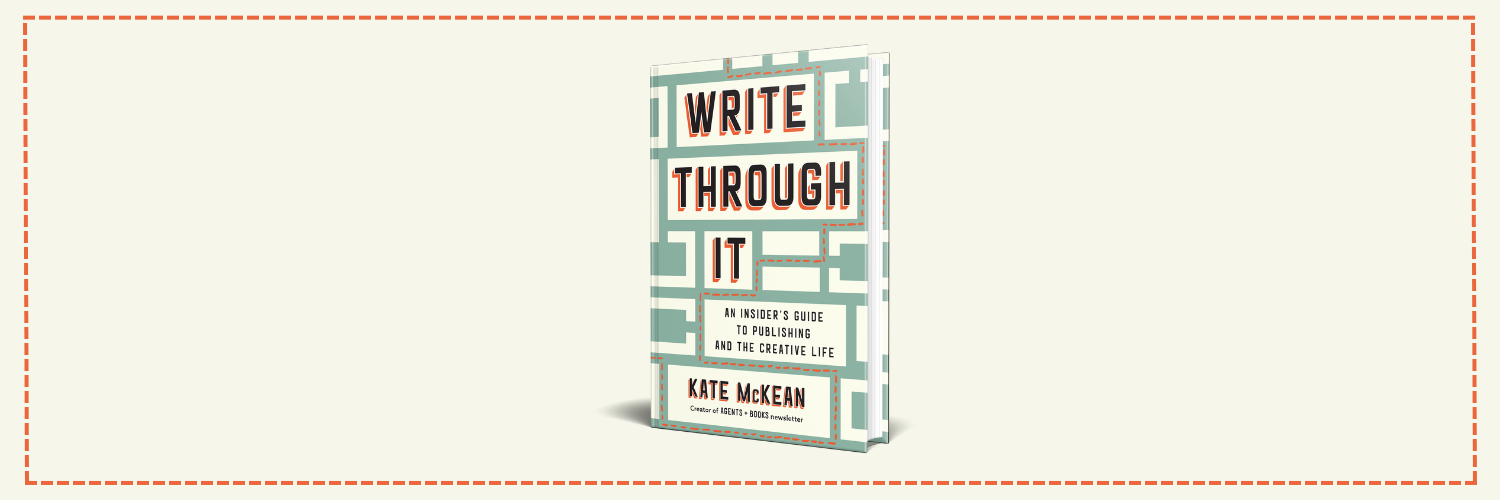
Do you run a book club or writing group that invites authors to talk to members? You can call me, too! In the new year, I'm looking to visit book clubs of any size, virtually or in-person in the NY Metro area, to talk about Write Through It: An Insider's Guide to Publishing and the Creative Life. We can talk about writing books, writing this book, writing any book, or how to get published–whatever you want. Interested? Email me at kate@katemckean.com.
XOXOXOOXOXOX,
Kate

Comments ()